
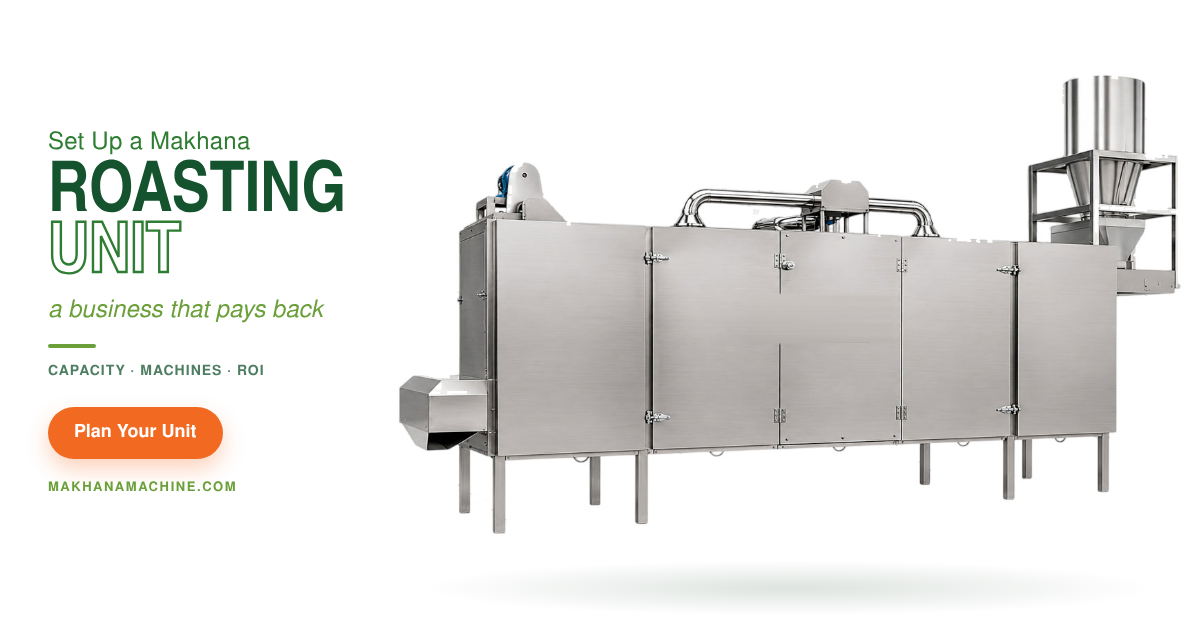
Makhana Roasting Machine Business Setup
Makhana, also called fox nut, is becoming a popular packaged snack in India. Rising demand for healthy, roasted and flavoured snacks has created opportunities for entrepreneurs interested in starting a makhana-processing business.
A makhana roasting machine helps businesses roast fox nuts evenly, reduce manual effort and maintain consistent product quality. With proper sourcing, flavouring, packaging and marketing, entrepreneurs can build a profitable small-scale or commercial makhana brand.
This guide explains the machine types, investment, production process, setup requirements, licences and business opportunities.
Why Start a Makhana Business?
Makhana is widely consumed as a snack, fasting food and health-oriented product. Bihar is one of India’s major makhana-producing regions, making it easier for businesses to source raw material through traders, mandis, farmer groups and processing suppliers.
Instead of selling raw makhana, entrepreneurs can increase its value through:
- Roasting
- Grading
- Flavouring
- Seasoning
- Branding
- Attractive packaging
- Online and offline distribution
Popular makhana products include:
- Salted roasted makhana
- Peri-peri makhana
- Pudina makhana
- Cheese makhana
- Masala makhana
- Ghee-roasted makhana
- Caramel-coated makhana
- Low-oil makhana
A business can begin with a small roasting unit and later expand into automated grading, flavouring and packaging.
What Is a Makhana Roasting Machine?
A makhana roasting machine is food-processing equipment designed to heat and roast fox nuts uniformly. Depending on the model, it may use a rotating drum, hot-air system, roasting pan or continuous conveyor.
The machine helps to:
- Remove excess moisture
- Improve crispness
- Roast makhana evenly
- Reduce burning
- Maintain consistent colour
- Process larger quantities
- Reduce labour requirements
- Standardise production quality
Commercial models may include digital temperature controls, adjustable drum speed, timers, automatic feeding, cooling systems and discharge arrangements.
Some machines can also process peanuts, almonds, cashews, grains and spices. However, always test the equipment with makhana because it is lightweight and more delicate than many other products.
Types of Makhana Roasting Machines
Batch Roasting Machine
A batch roaster processes a fixed quantity during each cycle. The operator loads the makhana, sets the roasting conditions and removes the finished batch.
This machine is suitable for:
- Small businesses
- Start-ups
- Local snack suppliers
- Product testing
- Businesses offering multiple flavours
Its main limitation is manual loading and unloading. Production may be slower than a continuous machine.
Rotary Drum Roaster
A rotary drum roaster uses a rotating chamber to move makhana continuously during roasting. This movement helps distribute heat and prevents excessive contact with one hot surface.
Important features may include:
- Stainless-steel product-contact parts
- Adjustable drum speed
- Temperature control
- Electric or gas heating
- Insulated chamber
- Easy discharge
- Exhaust arrangement
This is often a practical option for commercial businesses requiring consistent production.
Hot-Air Roaster
A hot-air roaster circulates heated air around the makhana. It can offer gentle and uniform roasting when airflow and temperature are properly controlled.
Benefits may include:
- Reduced direct-contact burning
- Better moisture removal
- Clean roasting
- Suitable for premium products
- Programmable heating cycles
A product trial is necessary because the correct airflow depends on makhana size and moisture content.
Continuous Roasting Line
A continuous roasting line feeds makhana through a conveyor or tunnel system. It is suitable for large businesses with regular wholesale or institutional orders.
A complete line may include:
- Hopper feeder
- Cleaning unit
- Grading system
- Continuous roaster
- Cooling conveyor
- Flavouring drum
- Packaging machine
This system requires more investment, space, maintenance and trained labour. New businesses should avoid excess capacity unless demand is already confirmed.
Makhana Roasting Machine Buying Guide
Selecting equipment only by price can create operational and financial problems. Consider the following factors before purchasing a commercial makhana roasting machine.
Machine Capacity
Manufacturers may describe capacity as kilograms per batch, kilograms per hour or kilograms per day. These measurements are different and should not be confused.
Calculate your actual requirement using:
Required capacity = Daily production target/ Effective operating hours
For example, a business targeting 200 kilograms daily with five effective operating hours needs approximately 40 kilograms per hour.
Remember that loading, unloading, heating, cleaning and flavouring reduce actual production time.
Construction Material
Choose food-contact parts made from food-grade stainless steel. SS304 is commonly preferred for food-processing applications because of its durability and cleanability.
Ask the supplier about:
- Product-contact material
- Outer frame material
- Weld quality
- Surface finish
- Insulation
- Gaskets and seals
- Cleaning access
Do not judge a machine by its external appearance alone. Verify the material used inside the roasting chamber.
Temperature Control
Makhana roasting depends on product size, moisture, batch quantity and desired crispness. The machine should offer stable and adjustable temperature control.
Useful features include:
- Digital temperature display
- Timer
- Thermostat or PID controller
- Overheating protection
- Adjustable heating intensity
- Programmable roasting settings
Ask the supplier to demonstrate temperature stability during a complete roasting cycle.
Heating System
Makhana roasters may use electricity, LPG or other heating methods. Electric systems are often easier to operate indoors, while gas systems may offer flexibility where electricity costs are high.
Evaluate:
- Electricity load
- Three-phase power requirements
- Fuel consumption
- Ventilation needs
- Safety controls
- Maintenance requirements
- Local technician availability
Confirm the power connection at your premises before placing an order.
Cooling System
Roasted makhana should cool before flavouring and packaging. Packing hot product can cause condensation, affecting texture and shelf life.
Cooling options include:
- Stainless-steel cooling trays
- Perforated cooling tables
- Blower-assisted cooling
- Cooling conveyors
- Integrated cooling chambers
Manual cooling may work for small operations, while larger units benefit from controlled conveyor cooling.
Cleaning and Maintenance
The roasting chamber should be easy to open, inspect and clean. Seasoning, oil and broken makhana can collect inside the machine.
Look for:
- Removable parts
- Smooth welds
- Easy access
- Few dead corners
- Simple crumb removal
- Available spare parts
- Local maintenance support
Easy cleaning improves food hygiene and reduces production downtime.
Machinery Required for Setup
A complete makhana business usually requires more than a roasting machine.
Essential equipment may include:
- Raw makhana storage containers
- Manual sorting tables or cleaning equipment
- Grading machine
- Makhana roasting machine
- Cooling trays or conveyor
- Flavouring or seasoning tumbler
- Oil or ghee spraying system
- Digital weighing scale
- Pouch-packing or sealing machine
- Nitrogen-flushing machine
- Batch coding machine
- Storage racks
Small businesses can initially perform sorting, cooling and some packing tasks manually. Automation can be added as order volume increases.
Makhana Business Investment
Investment depends on your production capacity, automation level, premises and packaging model.
Small-Scale Unit
A small unit may include:
- Semi-automatic roaster
- Manual sorting table
- Basic seasoning equipment
- Weighing scale
- Heat sealer
- Packaging materials
- Initial raw-material stock
- Electrical installation
- Working capital
A compact setup may cost several lakhs after including equipment, rent, packaging and working capital.
Medium-Scale Unit
A medium-scale setup may include:
- 50–100 kilogram-per-hour roaster
- Mechanical grading
- Seasoning machine
- Semi-automatic packaging machine
- Batch coding equipment
- Cooling system
- Storage and dispatch area
The equipment cost may range from several lakhs depending on capacity and automation.
Large Commercial Plant
A large plant may require:
- Continuous roasting line
- Automatic feeding
- Grading equipment
- Flavouring and coating systems
- Multi-lane packing machines
- Nitrogen flushing
- Quality-control equipment
- Warehouse space
Do not purchase a high-capacity machine without confirming demand. Unused capacity increases fixed costs and reduces return on investment.
Makhana Production Process
Step 1: Source Raw Makhana
Purchase raw makhana from reliable suppliers. Inspect each batch for:
- Size
- Colour
- Moisture
- Odour
- Broken pieces
- Insects
- Foreign material
Maintain supplier records and batch details.
Step 2: Clean and Grade
Remove dust, husk, damaged pieces and foreign particles. Grading creates uniformity and helps improve roasting consistency.
Step 3: Roast
Load the machine according to its recommended capacity. Overloading may prevent proper heat circulation and create unevenly roasted product.
Record:
- Batch number
- Raw-material weight
- Temperature
- Roasting time
- Final yield
- Product defects
Step 4: Cool
Transfer roasted makhana to clean cooling trays or a cooling conveyor. Do not pack the product while it is still hot.
Step 5: Flavour
Apply oil, ghee or seasoning using a flavouring tumbler. Ensure that the coating is evenly distributed without damaging the product.
Step 6: Pack
Use moisture-resistant packaging suitable for roasted snacks. Nitrogen flushing may be considered for premium products requiring longer freshness.
Step 7: Inspect
Check pack weight, seal quality, appearance, taste, odour, labelling and batch information before dispatch.
Licences and Compliance
Food businesses in India generally require suitable FSSAI registration or licensing according to their turnover and business scale.
Other possible requirements include:
- GST registration
- Shop and Establishment registration
- Local trade licence
- Legal Metrology compliance
- Fire and electrical safety approvals
- Pollution-related permissions, where applicable
- Trademark registration
Makhana packaging should generally display:
- Product name
- Ingredient list
- Net quantity
- Nutrition information
- Batch number
- Manufacturing or packing date
- Best-before information
- Maximum retail price
- FSSAI details
- Manufacturer or marketer address
- Customer-care contact
Always verify current rules before commercial production because food regulations and labelling requirements may change.
Selecting a Machine Supplier
Compare at least three manufacturers before making a purchase decision.
Ask each supplier for:
- Machine capacity
- Practical production output
- Product-contact material
- Power requirement
- Heating method
- Dimensions
- Warranty period
- Installation details
- Operator training
- Spare-parts availability
- Service coverage
- Maintenance charges
- Delivery schedule
Request a product demonstration using your own raw makhana. Evaluate the following:
- Roasting uniformity
- Crispness
- Colour
- Broken percentage
- Batch time
- Energy usage
- Cleaning time
- Ease of unloading
Include capacity, material, warranty, installation and service commitments in the purchase order.
Marketing and Sales Strategy
A roasting machine does not guarantee business success. Your brand needs consistent quality, attractive packaging and reliable distribution.
Start with three to five flavours instead of launching too many products. Test small packs before investing heavily in packaging and advertising.
Potential sales channels include:
- Kirana stores
- Supermarkets
- Gyms
- Wellness stores
- Cafés
- Corporate offices
- Online marketplaces
- Social-media stores
- Distributors
- Corporate gifting companies
Common pack sizes include 25 grams, 50 grams, 100 grams and 200 grams. Select sizes according to your target customers and price positioning.
Sampling can help introduce the product to retailers and local consumers. Track repeat orders carefully because repeat purchases are stronger indicators of product-market fit than one-time trials.
Common Mistakes to Avoid
- Selecting equipment only because it is inexpensive
- Confusing batch capacity with hourly output
- Ignoring electricity or ventilation requirements
- Overloading the roasting chamber
- Packing hot makhana
- Using weak packaging
- Launching too many flavours
- Failing to record batch parameters
- Ignoring raw-material loss
- Buying excess capacity
- Neglecting machine servicing
- Delaying licensing and labelling compliance
The most successful makhana businesses focus on consistent roasting, controlled costs, hygienic production and repeat sales.
Conclusion
A makhana roasting machine can help entrepreneurs establish a scalable food-processing business. However, the machine should match your production target, budget, premises and sales strategy.
Start with appropriate capacity, test the equipment using your own raw material and compare supplier quotations carefully. Focus on roasting consistency, hygienic processing, attractive packaging and strong distribution.
A small, well-managed roasting unit can gradually grow into a successful commercial makhana brand through disciplined production and customer-focused marketing.
FAQs
1. What is the price of a makhana roasting machine in India?
Makhana roasting machines generally cost between ₹75,000 and several lakhs, depending on capacity and automation.
2. Which machine is best for a small makhana business?
A semi-automatic batch or rotary drum roaster suits small businesses requiring affordable, flexible production.
3. How much space does a makhana roasting unit need?
Space depends on equipment size, storage, cooling, flavouring, packing and finished-goods requirements.
4. Can one machine roast makhana and other products?
Yes, many machines handle multiple products, but each product requires separate testing and cleaning procedures.
5. Is nitrogen flushing necessary for makhana packaging?
Nitrogen flushing is optional, but it may improve freshness, crunch and shelf life for packaged makhana.
6. Which licences are needed for selling roasted makhana?
Businesses generally require FSSAI registration or licensing, plus other applicable local and tax registrations.
7. Is a makhana roasting business profitable?
Profitability depends on sourcing costs, production efficiency, packaging expenses, pricing, distribution and repeat customer demand.