
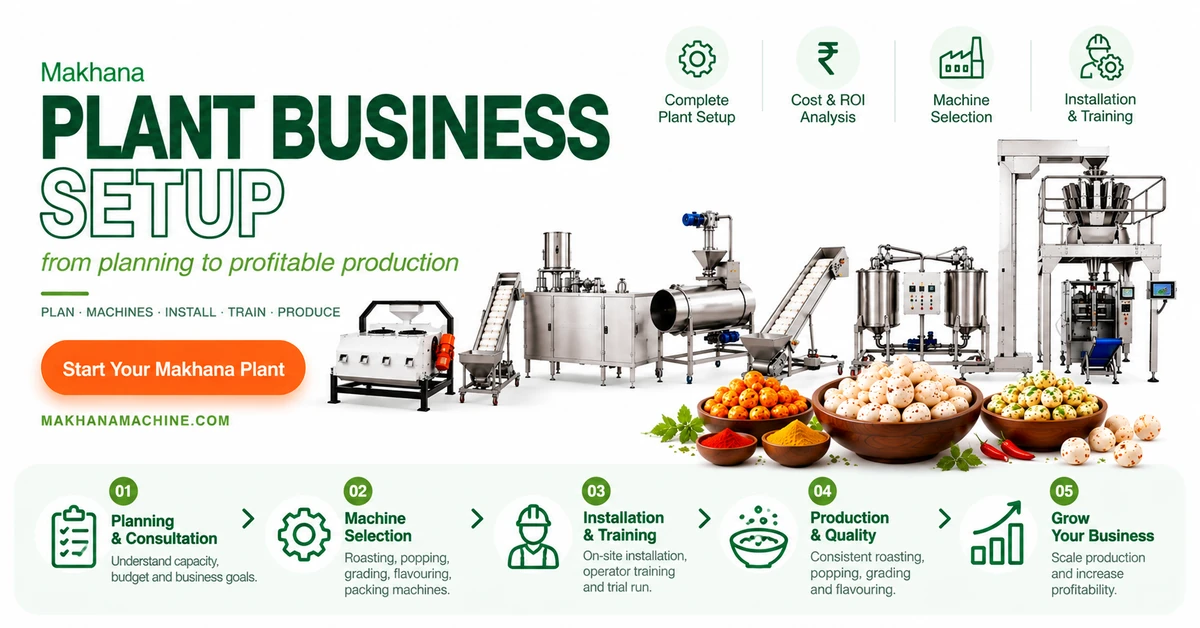
Starting a makhana processing business can be a practical opportunity for entrepreneurs who want to enter India’s growing healthy-snack market. Makhana, also called fox nuts or lotus seeds, is widely sold as a roasted, flavoured, ready-to-eat snack. It is used by households, retailers, snack brands, hotels, cafés, gift-pack companies, wholesalers, and exporters. However, good makhana is not only about flavour. Buyers also notice kernel size, colour, expansion, crispness, breakage, cleanliness, and pack appearance. This is where a makhana grading machine becomes important. It helps separate makhana into uniform size grades and removes small, broken, flat, unpopped, or defective pieces.
For a new business Makhana Suta Grades ,creates better control over product quality. Instead of selling mixed-size makhana, you can make separate categories for premium packs, regular packs, economy packs, and bulk buyers. This improves product presentation, reduces manual sorting work, and helps businesses use more of their raw material efficiently. This practical guide explains how to start a business using a commercial makhana grading machine, from planning the setup to choosing equipment, managing production, packing products, and building sales channels.
Understand the Makhana Grading Business
A makhana grading business involves sorting makhana according to size and physical quality. The aim is to create more uniform lots that are easier to process and sell.
In a mixed batch of makhana, some kernels may be large and fully expanded, while others may be small, broken, dark, flat, or unpopped. If these pieces are packed together, the product may look inconsistent. It may also roast unevenly because smaller kernels can heat faster than larger kernels.
A makhana grading machine India supplier may provide different models based on capacity, number of grades, material type, and level of automation. The machine usually separates makhana through vibrating screens, perforated sieves, or rotary systems. Different screen sizes allow kernels to pass through or remain on the screen according to their size.
The graded output can then be used for different markets. For example, large and clean makhana may be packed for premium retail customers. Medium-sized makhana can be used for mainstream flavoured snacks. Smaller kernels and broken material may be used for value packs, ingredient blends, or foodservice applications.
This means grading is not only a sorting step. It is a way to create product categories and improve the commercial value of each batch.
Choose Your Business Model
Before buying a machine, decide what type of makhana business you want to operate. Your business model will affect your machinery requirement, production area, labour need, investment level, packaging plan, and sales strategy.
Bulk Makhana Grading Business
In this model, you buy makhana in bulk, grade it into size categories, and supply it to traders, wholesalers, snack brands, or packaging companies.
This model may be suitable if you have strong B2B contacts and want to focus on material handling rather than consumer branding. Buyers may ask for specific size grades, lower breakage, clean product, and regular supply.
Branded Roasted Makhana Business
In this model, you grade makhana, roast it, add flavours, pack it, and sell it under your own brand.
This requires more work than bulk supply, but it also gives you control over packaging, product positioning, flavour development, and customer experience. You can sell through local stores, supermarkets, online platforms, distributors, and direct-to-consumer channels.
Contract Grading Service
Some small traders and processors may not own a grading machine. You can offer them grading services on a job-work basis.
This model may work in areas where makhana trading or processing already exists. You can charge per kilogram, per batch, or according to machine time. However, machine cleaning, batch separation, and quality control become very important in this service model.
Integrated Makhana Processing Unit
An integrated unit handles several activities in one place. These may include cleaning, grading, roasting, seasoning, cooling, packing, storage, and dispatch.
This model needs better planning and a higher investment, but it can provide greater control over quality and output. It is suitable for businesses that want to grow into large-scale retail, institutional supply, or export-oriented operations.
Decide What Material You Will Grade
A makhana grader can be used at different stages of processing. It is important to clarify this before selecting a machine.
Some businesses grade raw makhana seeds before further processing. Others grade popped makhana before roasting and packaging. The required machine design may change depending on the product stage.
For a ready-to-eat snack business, popped makhana grading is usually the main need. The machine separates popped makhana into size categories and removes undesirable material.
The common materials handled in a grading process include:
- Large popped makhana kernels.
- Medium-sized popped makhana.
- Small popped makhana.
- Broken makhana pieces.
- Flat or poorly expanded kernels.
- Unpopped or semi-popped pieces.
- Dust and fine particles.
- Foreign material removed during pre-cleaning.
Before purchasing equipment, collect representative samples from your intended suppliers. Test the sample for size variation, breakage, moisture, colour, odour, and dust. A machine trial using your own material gives more useful information than relying only on catalogue specifications.
Select the Right Makhana Grading Machine
The right commercial makhana grading machine should match your actual production requirement. Do not select machinery only because it has a high capacity or a lower initial price.
A small business may begin with a lower-capacity machine and expand later. A growing snack brand may require a multi-deck machine with several grades and a smoother material flow. Bulk traders may need higher throughput but may not require roasting or seasoning equipment.
Consider these factors while selecting a machine:
Capacity
Capacity is usually measured in kilograms per hour. Choose it according to your daily volume and working hours.
For example, if you plan to process 300 kg daily in a six-hour shift, a machine with an actual output close to 50–70 kg per hour may be sufficient. If your sales increase later, you can add shifts or upgrade the setup.
Do not assume that listed capacity will always match real production. Actual output can depend on product size, screen selection, feeding speed, machine settings, and operator handling.
Number of Grades
Different businesses need different grading categories. A basic system may separate material into two or three outputs. A more advanced setup may create several size grades along with broken and reject material.
More grades can help create better product segmentation. However, too many categories can complicate storage and inventory if there is no clear market for each grade.
Gentle Product Handling
Makhana is light and fragile. Rough feeding, excessive vibration, sharp edges, or poor material transfer can increase breakage.
Ask the supplier how the machine controls product movement. Check whether the feed point, screens, discharge outlets, and collection trays are designed to reduce damage.
Food-Grade Construction
Food-contact parts should be cleanable and suitable for food handling. Stainless steel is commonly preferred for areas that touch the product.
The machine should have smooth surfaces, accessible screens, and easy-to-clean collection points. This helps maintain hygiene and reduces product contamination risk.
Screen Change and Cleaning
Screen size affects grade separation. A machine with easily removable screens makes it simpler to clean the unit and change grade settings when required.
Cleaning should be done between batches, especially when changing suppliers, product quality levels, or flavoured material types.
Power and Space Requirement
Check the electrical load, voltage requirement, machine dimensions, and floor-space needs before ordering. Also consider the space required for raw material bags, collection bins, operator movement, and cleaning access.
Avoid placing the machine in a crowded room where material flow becomes difficult.
Supplier Support
A machine breakdown during peak production can affect deliveries and customer confidence. Confirm the availability of spare screens, motors, bearings, electrical components, technical guidance, and service support.
Ask the supplier for installation support, operating instructions, maintenance guidance, and machine trial details.
Plan Your Processing Layout
A well-planned layout saves time and improves hygiene. The goal is to ensure material moves in one direction, from incoming raw makhana to packed finished product.
A simple layout may include the following zones:
- Raw-material receiving area.
- Incoming inspection table.
- Pre-cleaning section.
- Makhana grading machine area.
- Graded-product collection area.
- Roasting section.
- Seasoning and mixing section.
- Cooling area.
- Packing section.
- Finished-goods storage area.
- Dispatch section.
Keep raw material away from packed finished goods. This helps reduce dust transfer, mix-ups, and avoidable contamination.
The processing area should be dry, clean, well lit, and easy to maintain. Makhana can lose crispness if exposed to moisture, so humidity control and proper storage are important.
Use racks or pallets to keep raw-material bags away from the floor. Keep cleaning chemicals separate from food material. Provide handwashing facilities, protective clothing, waste bins, and pest-control measures.
Procure Quality Makhana
The quality of your final product depends heavily on the quality of incoming makhana. A grading machine can separate sizes and remove some defects, but it cannot turn poor-quality material into premium makhana.
When buying makhana, inspect a representative sample before approving a large lot. Check the following points:
- Kernel size and size variation.
- Colour and visual appearance.
- Expansion level.
- Number of broken pieces.
- Presence of flat or unpopped kernels.
- Dust and foreign matter.
- Odour and freshness.
- Moisture condition.
- Signs of mould, pests, or storage damage.
- Consistency across bags or lots.
Build relationships with reliable suppliers rather than changing suppliers only to get a slightly lower rate. Consistent sourcing makes grading, roasting, and product quality easier to manage.
Maintain records for each purchase lot. Record the supplier name, lot date, quantity received, sample observations, accepted quantity, rejected quantity, and any quality concerns. These records help identify recurring supplier issues.
Use Grading to Create Product Categories
The main business advantage of a makhana grading machine is that it helps create clear product categories.
Instead of mixing all kernels into one product, separate them according to their suitability.
Premium Grade
Premium grade usually includes large, well-expanded, clean, uniform kernels with low breakage. This grade can be used for premium roasted snacks, gift packs, gourmet retail packs, and high-value online products.
Premium packs should have strong packaging, clear branding, and consistent product appearance.
Regular Grade
Regular grade may include medium-sized but clean and acceptable kernels. It is suitable for everyday roasted makhana packs sold through general retail stores, supermarkets, offices, cafés, and online channels.
This grade may become the core volume product for many brands.
Value Grade
Smaller kernels, slightly uneven pieces, or higher but controlled breakage may be sold in value packs. This can help reach price-sensitive customers without affecting the presentation of premium packs.
The product should still be safe, clean, fresh, and properly packed. Value positioning should never mean ignoring quality control.
Broken Makhana
Broken makhana can be used in ingredient applications, trail mixes, snack mixtures, makhana flour blends, or lower-priced product formats. It should be stored separately and clearly identified.
Do not mix broken material into premium packs simply to increase weight or reduce wastage. This can hurt repeat purchases and brand trust.
Add Roasting and Flavouring
Graded makhana can be sold as plain material, but roasting and flavouring can increase product value. Roasted makhana is popular because it is convenient and can be offered in many taste profiles.
Common product options include:
- Plain roasted makhana.
- Salted makhana.
- Black pepper makhana.
- Pudina makhana.
- Peri-peri makhana.
- Tangy tomato makhana.
- Cheese-style makhana.
- Masala makhana.
- Sweet or jaggery-coated makhana.
Roasting should be controlled carefully. Uneven heat can create burnt spots, poor crispness, or an unpleasant flavour. Using uniform grades helps because similar-sized kernels respond more consistently during roasting.
After roasting, the product is usually seasoned with oil, salt, spices, or flavour blends. The coating should be even but not excessive. Too much oil can make the product heavy, greasy, or more difficult to pack.
Always cool roasted makhana before packing. Packing warm product can create trapped moisture inside the pack, which may reduce crispness and shelf life.
Choose Suitable Packaging
Packaging protects makhana from moisture, oxygen, handling damage, and contamination. It also communicates your brand identity to buyers.
For retail products, common options may include laminated pouches, stand-up zipper pouches, pillow pouches, jars, tins, or cartons. The best choice depends on your market positioning, pack size, distribution channel, and budget.
Good packaging should provide:
- Moisture resistance.
- Strong sealing.
- Protection from crushing.
- Clear product information.
- Attractive shelf appearance.
- Easy storage and transport.
- Suitable portion size.
Popular pack sizes may include small trial packs, single-serve packs, regular family packs, and bulk packs. Start with limited sizes so you can manage inventory easily.
The label should include required food information, such as product name, ingredient list, nutrition information where applicable, net quantity, batch details, packing date, best-before date, storage instructions, manufacturer details, and relevant declarations.
Food businesses must obtain the suitable FSSAI registration or licence before manufacturing and selling food products. The correct category depends on the business activity and scale of operation.
Build a Basic Quality System
Quality should not depend only on visual checking at the end. Build checks into each stage of production.
At the raw-material stage, inspect every incoming batch. During grading, monitor screen performance, breakage, dust removal, and grade separation. During roasting, check crispness, colour, aroma, and uniformity. During packing, verify net weight, seal quality, and batch coding.
Maintain a simple quality checklist covering:
- Supplier and batch number.
- Incoming material condition.
- Graded output quantity.
- Rejection quantity.
- Roasting date.
- Flavour batch used.
- Pack size.
- Final net weight.
- Packing date.
- Best-before date.
- Dispatch record.
This system helps trace product issues if a retailer or customer raises a complaint. It also makes operations more disciplined as the business grows.
Build Sales Channels
A strong machine setup is useful only when it is supported by a realistic sales plan. Start by identifying where your product will be sold.
Local Retail Stores
Local grocery stores, dry-fruit shops, organic stores, cafés, and snack outlets can help you test demand in your area. Offer sample packs and collect feedback on taste, pack size, price, and product appearance.
Distributors and Wholesalers
Distributors can help reach many stores quickly, but they may expect trade margins, regular stock availability, and consistent supply. Keep a clear pricing policy for distributors, retailers, and direct customers.
Online Marketplaces
Online platforms can help reach customers outside your city. However, success depends on good product photos, clear pack information, competitive pricing, reviews, and fulfilment planning.
Direct-to-Consumer Sales
You can sell directly through a website, WhatsApp Business, social media, exhibitions, corporate gifting, and subscription packs. This may give better customer feedback and stronger control over brand communication.
Business-to-Business Supply
Hotels, offices, caterers, gift companies, snack brands, and foodservice businesses may buy graded or roasted makhana in bulk. For B2B customers, provide sample packs, product specifications, bulk pricing, and reliable delivery timelines.
Control Your Costs
A makhana business involves more than machine cost. Your working capital requirement may include raw makhana, seasoning ingredients, packaging material, rent, electricity, labour, transport, marketing, samples, storage, and distributor margins.
Calculate your cost per pack before fixing your selling price. Include all direct and indirect expenses.
Your costing sheet should include:
- Raw makhana cost.
- Grading loss and breakage.
- Roasting cost.
- Flavouring ingredients.
- Packaging material.
- Labour.
- Electricity.
- Rent and maintenance.
- Transport.
- Sales commission or distributor margin.
- Marketing cost.
- Product returns or damage allowance.
Do not price only by looking at competitors. Your price should support sustainable margins while remaining suitable for your target customer.
Avoid Common Setup Mistakes
Many new businesses lose money because they focus only on equipment and ignore operational planning.
Avoid these mistakes:
- Buying a large machine before confirming material availability.
- Selecting equipment without testing actual makhana samples.
- Ignoring product breakage during machine trials.
- Using poor-quality raw material to reduce purchase cost.
- Mixing multiple grades in premium retail packs.
- Roasting unevenly due to poor temperature control.
- Packing warm makhana.
- Launching too many flavours at once.
- Using weak packaging with poor moisture protection.
- Depending on only one supplier or one buyer.
- Ignoring batch records and quality checks.
- Underestimating distributor margins and marketing costs.
Start with a focused product range and controlled capacity. Learn from initial batches, customer reviews, retailer feedback, and return data before expanding.
Grow the Business Step by Step
Once your grading and packing system becomes stable, growth can happen in several directions.
You can add more flavours, larger pack sizes, gift boxes, premium product lines, institutional packs, or private-label manufacturing. You can also supply graded material to other snack brands.
As volumes rise, consider adding equipment such as pre-cleaners, roasting machines, seasoning drums, cooling conveyors, weighing systems, nitrogen-flushing packing machines, metal detectors, and larger storage solutions.
Growth should be based on repeat demand, not only one-time orders. Focus on maintaining the same quality every time. In packaged snacks, customers often return because they trust the taste, freshness, and consistency of the product.
A makhana grading machine gives a business the ability to handle product variation more professionally. With reliable sourcing, careful grading, hygienic processing, suitable packaging, and strong sales execution, a small operation can gradually grow into a trusted makhana brand or bulk-processing business.
Frequently Asked Questions
What does a makhana grading machine do?
It separates makhana by size and removes broken, flat, unpopped, or defective kernels.
Who should buy a commercial makhana grading machine?
Processors, snack brands, traders, exporters, and packaging units handling regular makhana volumes should invest.
Can graded makhana improve roasting results?
Yes, uniform kernel sizes roast more evenly and improve colour, texture, and seasoning consistency.
Is grading necessary for small makhana businesses?
Yes, grading improves product appearance, reduces manual work, and creates better retail categories.
What material is preferred for makhana grading machines?
Food-contact sections should preferably use food-grade stainless steel for hygiene and easier cleaning.
Can broken makhana be sold?
Yes, broken makhana can be used for value packs, mixes, ingredients, or processing applications.
What is important before buying a makhana grader?
Test your own material, verify breakage, confirm capacity, and check supplier service support.